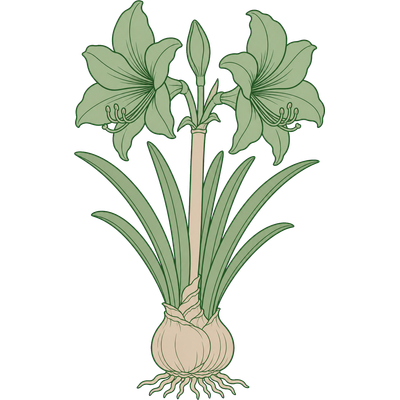
Plant Passport
Amaryllis
Hippeastrum x hybridum
LightBright
Water7-10d
PetCheck
PP HIPP EAST RUMH
Issued 2026 · Valid while cared for
Amaryllis
Hippeastrum x hybridum
Also known as Hippeastrum hybridum
“My flower is quick drama, but next year's show depends on feeding my leaves afterward.”
floweringgift plantbright windowfast growingstatement plant
- Light
- Bright light
- Water
- Let dry between waterings
- Pet safety
- Toxic to pets
- This month
- Finish the strongest growth flush with one more light feed. Review support or pruning needs for the upright shape before tired leaves hide pests Cue: Large exposed bulb producing thick hollow stems topped.
August care tip
Finish the strongest growth flush with one more light feed. Review support or pruning needs for the upright shape before tired leaves hide pests Cue: Large exposed bulb producing thick hollow stems topped.
Quick Care Summary
- Light
- Bright light
- Water
- Let dry between waterings
- Placement
- Best in a bright warm windowsill while flowering, then a sunny growing spot for leaves, protected from harsh midday sun and cold draughts.
- Temperature
- 10–30°C
- Humidity
- low
Free printable Plant Passport card
Print, cut, and place this Amaryllis card in the pot. Add the physical card if you want the finished version.
Printable card preview
Compare the simple formats before you download the free card or add a finished card above.
Plant Passport
Amaryllis
LightBright
Water7-10d

Botanical stake card
- Format
- 150 x 25mm
- Best for
- Slim plant stakes and gift pots
Use the card section above when you are ready to download or add a printed card.
Protect the printed card
Waterproof badge holders keep the free printable card readable through every watering.
View holders →Detailed Care Guide
Watering Method
Water deeply, let the pot drain, then wait until the mix has dried clearly before the next round.
Soil Mix
free-draining bulb mix with the top third of the bulb above the soil
Repotting
Repot or refresh the top layer in spring when roots are active.
Pruning
Prune lightly during active growth and remove damaged leaves promptly.
Pot Preference
Use a pot with drainage; choose weight and size to match the plant's top growth.
Fertilizing
Feed lightly from March to September; skip fertilizer in winter or during cool rest.
Draft Sensitivity
Keep above 10 C and away from sharp cold draughts.
Sources consulted
- powo.science.kew.org
- www.aspca.org
- www.rhs.org.uk
Room Placement
Window Direction
South, south-west or the brightest east window; filter scorching summer glass when needed.
Best Room
a bright warm windowsill while flowering, then a sunny growing spot for leaves
Monthly Care Calendar
Aug (now)
Finish the strongest growth flush with one more light feed. Review support or pruning needs for the upright shape before tired leaves hide pests Cue: Large exposed bulb producing thick hollow stems topped.
Sep
Start reducing fertilizer and stretch watering as nights cool. Move Amaryllis closer to the brightest indirect position before autumn light drops Cue: Large exposed bulb producing thick hollow stems topped.
Oct
Stop feeding and prepare for heating season. Keep temperature steady and avoid cold drafts Cue: Large exposed bulb producing thick hollow stems topped.
Nov
Winter risk check: test soil before watering, inspect large exposed bulb producing thick hollow stems topped with huge trumpet, and keep the pot draining freely while growth slows Cue: Large exposed bulb producing thick hollow stems topped.
Watering Schedule
- Summer
- Every 8 days
- Winter
- Every 18 days
Feel well into the mix; water only when it has dried clearly.
Common Problems
Propagation
stem cuttings in soileasyspring
Propagate during active growth, keep the material warm and lightly moist, and wait for new growth before potting on.
Pests & Diseases
Spider mites
Early signs
Fine speckling, sticky residue or webbing on stressed new growth.
Treatment
Rinse or wipe leaves, isolate the plant and repeat treatment weekly until clear.
Mealybugs
Early signs
Cottony clusters, scale-like bumps or sour smell near the crown and leaf joints.
Treatment
Remove visible pests, improve airflow and check roots if the problem returns.
Buying Tips
Choose Amaryllis with clean growth, firm stems and no pests in the leaf joints.
Frequently Asked Questions
Fun Facts
The holiday amaryllis sold in shops is botanically Hippeastrum; true Amaryllis is a different South African genus.
Origin & Natural Habitat
Garden hybrids descend from South American Hippeastrum species adapted to seasonal growth from a bulb.
Plants with similar care
Want cards for more plants?
Move from one free card to a ready-to-use set.